
Bookshelf Speaker Placement: Sound and Decor Tips for Tree Bookshelves
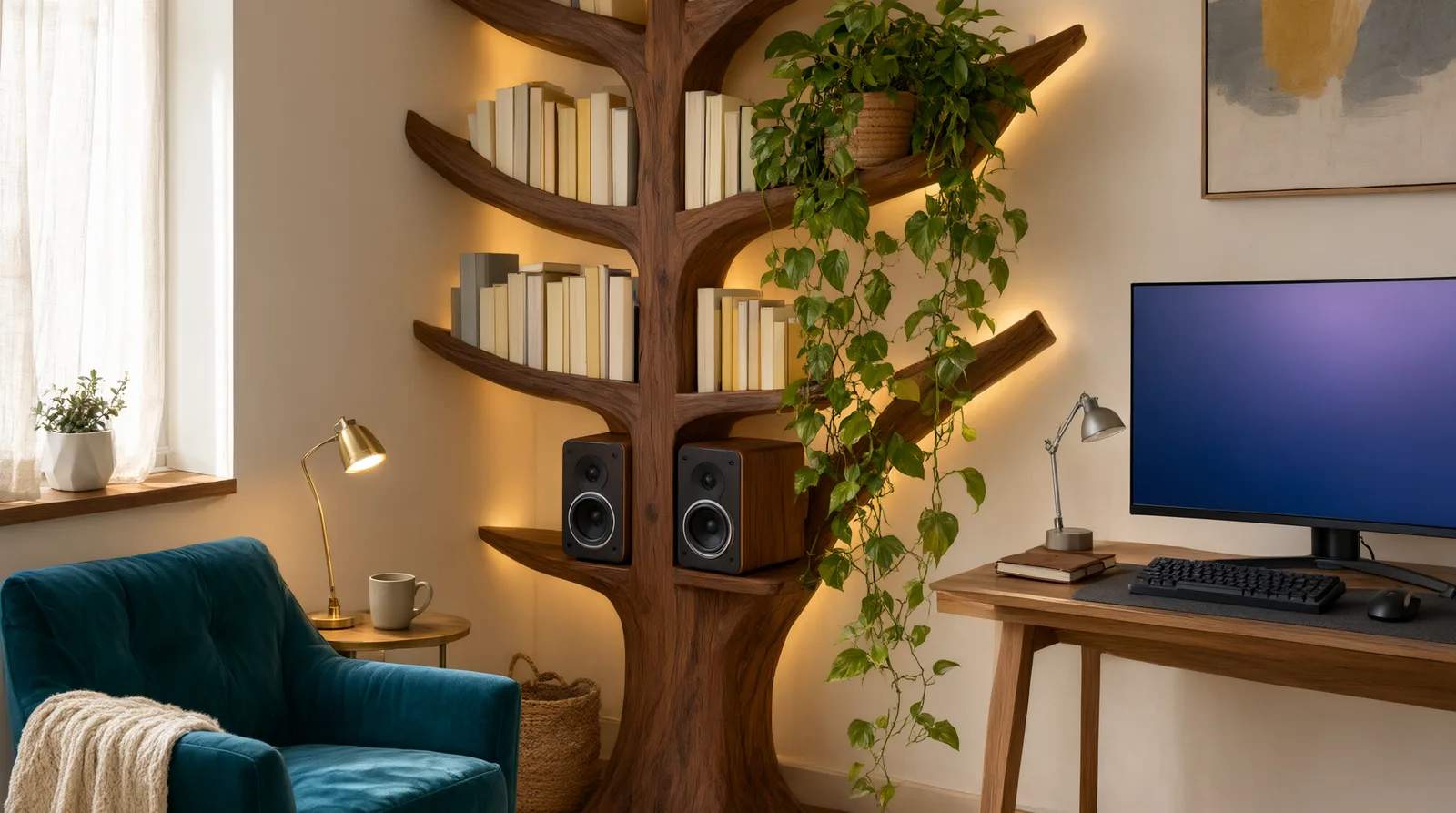
When you bring home a sculptural wooden tree bookshelf, it naturally becomes the focal point of your room. But if you are a gamer or PC audio enthusiast, you might wonder where your bookshelf speaker placement fits into all those winding branches. The good news is that with a little experimentation, these whimsical shelves can actually enhance your listening experience and make your tech gear look like part of a curated fantasy setting.
Traditional bookshelf speakers get their name from, well, sitting on flat bookshelves. On a tree bookshelf, the organic shape introduces a few acoustic quirks that can work in your favor—or against it—if you do not pay attention to a few key details.
Why Bookshelf Speaker Placement on a Tree Bookshelf Is Different
The open branching structure scatters sound waves rather than providing a flat reflective surface. Stereo imaging can feel airier and more spacious, but you may need to angle the speakers more precisely to maintain a focused phantom center. A slight toe-in often helps, though the ideal direction might be a few degrees more inward than you would use on a standard shelf.
Without a solid shelf backing, rear-ported speakers have significantly more breathing room. This can improve bass response and reduce that stuffy, boxed-in character that can plague conventional bookshelves—provided the ports themselves are not blocked by adjacent books or trailing plants. In a recent roundup of the best PC speakers, experts noted that even small positioning changes can dramatically change stereo imaging (PC Gamer, 2026). On a tree bookshelf, that reality becomes both a challenge and an opportunity.
Ear-level positioning remains critical, but the varied branch heights mean you will likely need to experiment more than you would with a rectangular shelf. The beauty is that you can often find a creative nook that puts the tweeters right at ear height when you are seated at your desk, without needing separate stands.
Choosing the Right Spot on Your Tree Bookshelf for Speakers
Start by placing speakers on a sturdy lower or mid-level branch that can comfortably support their weight. Models like the Wooden Verdantris Tree Bookshelf feature thicker branches and a grounded silhouette that handles heavier tech without wobbling. Always test stability before running speakers at higher volumes, especially if the shelf is free-standing rather than wall-mounted.
Avoid the very top shelf where sound will shoot over your head and leave you disconnected from the mix. Instead, choose a branch that lets you aim the tweeters roughly toward ear level when you lean back in your gaming chair. A few inches of adjustment can make the difference between murky dialogue and crisp detail.
If you opt for a wall-mounted design like the Wooden Eryndor Tree Wall Bookshelf, the installation height determines the speaker elevation right from the start. Plan the shelf height around your desk and monitor setup so the speakers naturally align with your seated listening position. This avoids awkward downward tilts later.
Finally, use compact isolation pads or small foam wedges under each speaker. They decouple the cabinet from the wood, reducing unwanted vibrations that can travel through the branch structure and muddy the sound—plus they give you a little extra aiming flexibility.
Blending Tech with Whimsy: Decorating Around Speakers
You do not have to choose between great audio and a storybook aesthetic. Match speaker finishes to the wood tone of your tree bookshelf—a dark walnut shelf pairs naturally with black or dark grey speakers, while lighter ash works beautifully with white or silver grilles. This simple alignment keeps the whole vignette cohesive.
Soften the look by framing the speakers with trailing plants like pothos and stacks of colorful books. A well-placed vine can cascade over a cable, and a stack of vintage paperbacks beside a speaker grille turns the speaker into an intentional part of a curated collection rather than a utilitarian add-on.
Route cables along the back of the trunk or down a branch using clear adhesive clips or fabric cable sleeves. When a cable disappears into a leafy plant or follows the natural grain of the wood, the magic of the tree design stays intact. Position the speakers so their grilles visually align with the directional flow of the branches—this creates a cohesive visual rhythm that turns the whole shelf into a sculptural audio installation.
Acoustic Tweaks for a Tree Bookshelf Setup
A few small adjustments can go a long way toward clean, accurate sound on a tree bookshelf:
- Decouple from the wood: Place a piece of acoustic felt or a dense foam pad under each speaker. This prevents the wooden shelf from humming during heavy bass passages and tightens up the low end.
- Give ports room to breathe: If your speakers are rear-ported, ensure at least a few inches of clear space behind them so airflow is not stifled by a stack of books or the shelf’s trunk. The open back of the tree design helps, but clutter can still choke the sound.
- Angle inward just enough: Start with the drivers aimed directly at your shoulders, then nudge them inward by 10 to 15 degrees. This gives you focused stereo imaging without collapsing the soundstage into a tiny sweet spot.
- Keep them out of tight nooks: Avoid tucking a speaker into a cavity formed by intersecting branches. That enclosed space can create a boomy, boxy resonance that overwhelms the natural tone of your music or game audio.
Creating a Gamer’s Sanctuary: The Full Vibe
Add subtle LED backlighting behind the tree bookshelf to create a soft halo that highlights the silhouette without overwhelming your screen. Warm white or soft amber keeps the corner cozy and reduces eye strain during long sessions—it also makes the branches pop after dark in a way that straight-edged shelves rarely can.
Stick to a unified color palette—think dark-stained wood, matte black gear, and deep green plants. This turns the entire corner into a deliberate space rather than a random collection of tech. A cohesive palette lets the sculptural shape of the tree itself remain the star while still delivering the audio performance you want.
Consider angling the entire shelf so that when you are not gaming, the speakers become part of a storybook forest that holds your favorite novels. A single reading chair beside the tree transforms the setup into a sanctuary where music, stories, and visuals all coexist naturally.
Ready to find the perfect tree bookshelf for your speaker setup? Explore our Bookcases & Standing Shelves collection to see all shapes and finishes, from floor-standing statements to wall-mounted designs that complement your room’s floor plan and your audio gear.
Frequently asked questions
Can I put heavy powered speakers on a tree bookshelf?
Yes, as long as you choose a model with sturdy lower or mid-level branches. The Wooden Verdantris Tree Bookshelf, for example, has thick branches that can support heavier powered speakers. Always check stability before pushing the volume, and use isolation pads to distribute weight evenly.
Should I wall-mount my speakers instead of putting them on the shelf?
Wall-mounting the speakers themselves is an option, but you can place them directly on a wall-mounted tree bookshelf like the Wooden Eryndor Tree Wall Bookshelf. The key is to install the shelf at a height that aligns the tweeters with your ear level when seated. This gives you the whimsical look without needing separate speaker stands.
Will the wood vibrate and ruin the sound?
Not if you decouple them properly. Wooden branches can vibrate, but placing dense foam pads or acoustic felt under each speaker isolates the cabinet and prevents the wood from humming during bass-heavy scenes. It is a simple fix that tightens the overall sound.
Do rear-ported speakers work well on open tree shelves?
They often work very well because the open back of a tree bookshelf gives rear-ported speakers extra breathing room. Just make sure there is still a few inches of clearance behind the port—books or plants pushed too close can choke airflow and reduce bass definition.
How do I hide speaker wires on a tree bookshelf?
Route cables along the back of the trunk using clear adhesive clips or fabric cable sleeves. You can also tuck them behind trailing plants like pothos, which naturally hide the wire while enhancing the forest-like aesthetic. Keep cables as tight and tidy as possible so they do not interrupt the tree’s silhouette.