
Forsake the IKEA Hack: Build a Stunning Wooden Tree Bookshelf Wall Instead
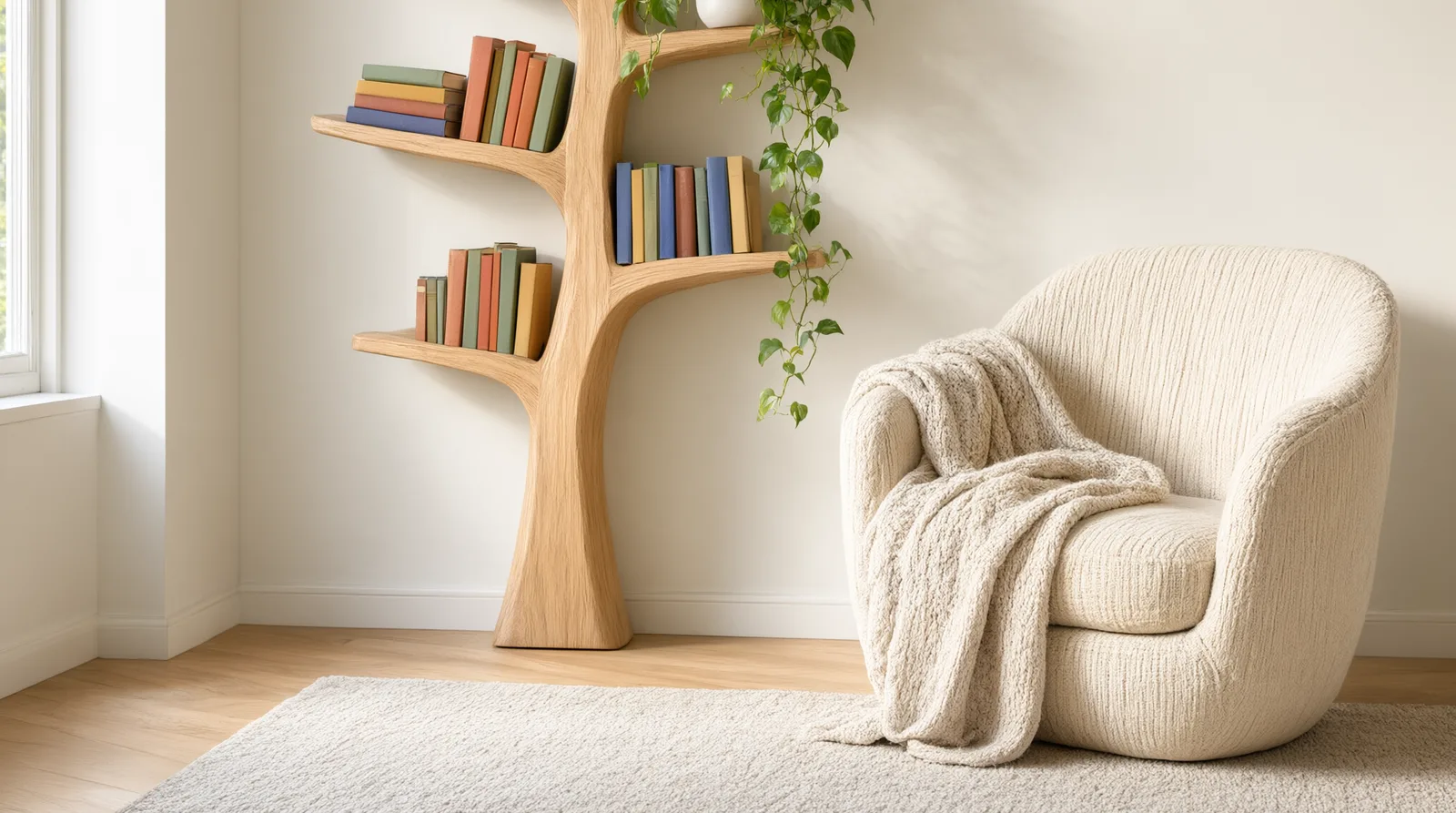
If you’ve been swept up by the recent wave of IKEA Havsta hack envy, picturing a full wall of clean, white built-ins for your living room, you’re not alone. That vision, however, often comes with hidden costs: particleboard that sags under the weight of actual books, a finish that chips during assembly, and a monolithic look that can feel more like a sterile showroom than a home. A wooden tree bookshelf wall steps in as the sturdier, more soulful alternative—one that brings the calm of nature indoors without a single permanent anchor.
Rather than forcing cookie-cutter cabinets across an entire wall, imagine a sculptural forest of wood that grows upward with organic branches and leaf-like platforms. It’s a design choice that trades the hack’s fleeting DIY trend for a lasting focal point built from solid timber.
Why the IKEA Havsta Hack Is Popular (and Where It Misses the Mark)
The IKEA Havsta built-in hack earned its fame by promising the look of custom millwork on a budget, landing features like a Yahoo Life article showcasing a TV-free living room transformation. Its clean lines and uniform appearance can certainly create a sense of order, but that order often proves fragile. The Havsta’s particleboard core, while fine for light decor, begins to bow when faced with the sustained weight of a hearty book collection; long horizontal shelves visibly dip after a year or two.
During assembly, the melamine surface is notoriously easy to chip at the edges, leaving a raw, unfinished spot that’s hard to repair seamlessly. Then there’s the installation: achieving that true built-in look usually demands screwing the units to the wall and to each other, a permanent alteration that’s a headache for renters. Aesthetically, the result can feel relentlessly blocky and cold, lacking the texture, warmth, and personality that make a wall feel like the heart of a room.
The Structural Strength and Long-Term Stability of a Solid Wood Shelf
When you swap particleboard for solid wood, the change is more than cosmetic. A wooden tree bookshelf is typically crafted from thick, responsibly sourced timber using joinery techniques that outperform the cam-lock and dowel systems of flat-pack furniture. The central "trunk" of a tree bookshelf acts as a vertical spine, distributing weight downward so shelves resist warping under heavy art books or rows of hardcovers—exactly where a long Havsta shelf would start to sag.
Stability also doesn’t have to rely on drilling into studs. Many well-designed models, like the Wooden Sylvenoak Tree Bookshelf, employ a broad, wedge-shaped base or a gently angled lean that plants the piece securely against the wall using gravity. This makes them surprisingly steady on carpet or slightly uneven floors, and far less likely to tip forward than a top-heavy, unanchored bookcase. You’re investing in a freestanding sculpture that just happens to hold your books.
Nature-Inspired Design: Why a Wooden Tree Bookshelf Wall Outshines Generic Built-Ins
Here’s where the magic really happens. Instead of a rigid grid of identical rectangles, a tree bookshelf wall introduces winding branches, rounded leaves, and asymmetrical platforms that immediately soften a room. This is biophilic design at work—bringing organic, nature-mimicking forms inside to create a restorative, calming atmosphere that a wall of boxy cabinets simply can’t replicate.
The uneven shelving itself becomes a curatorial tool. You’re forced to break up long runs of books with negative space, a small plant, or a cherished object, which naturally leads to a more dynamic, story-filled display. And because the shelf itself is so visually striking, the wood tone does the heavy lifting of wall art. A dark, moody piece like the Wooden Noctaryn Flow Tree Bookshelf turns into a dramatic shadow box, while the lighter, sculpted grain of the Wooden Arborwyn Sculpted Tree Bookshelf reads like airy, contemporary sculpture. You won’t miss the extra wall decor.
Designing a Cohesive Wall Composition with Multiple Tree Shelves
To capture the scale of a built-in wall without any construction, think in terms of a small grove rather than a single tree. Placing two or three wooden tree bookshelves of different heights and branch spans along the same wall fills horizontal space organically, creating the whimsical illusion that a forest has sprouted indoors. The key is balancing visual weight so the arrangement feels intentional, not cluttered.
Pair a tall, broad-shouldered statement piece like the Wooden Briarcrest Tree Bookshelf with a slimmer, more vertical design beside it—this leaves breathing room and lets each tree’s silhouette be appreciated. Unify the entire composition through styling: decide on a consistent method of stacking books (all horizontal piles, for instance), then repeat one accent material across all the shelves—brass bookends, ceramic vases, or woven baskets. Browse the Bookcases & Standing Shelves collection to find shapes that complement each other, from densely branched to airy and open.
Integrating a Wooden Bookshelf Wall Into a TV-Free Sanctuary
The Yahoo article that popularized the Havsta hack was built around the idea of a TV-free living room, and a tree bookshelf wall is the ultimate replacement focal point. It doesn’t just store stories; it becomes the room’s visual narrative, encouraging reading, conversation, and quiet analog moments over passive screen time.
To anchor the zone, pull a comfortable armchair, a floor lamp with a warm bulb, and a small side table into the space just in front of the trees. At night, tuck a slim uplight or LED strip behind the central tree bookshelf, and watch the branches cast dramatic, slow-shadow patterns across the wall and ceiling—the entire structure transforms into an enchanting light feature. Use the lowest, sturdiest broad branches to showcase oversized art books laid flat or a small sculptural object, so the shelf participates actively in your decor rather than fading into the background as mere storage.
Ready to leave the particleboard hack behind? Explore the full range of sculptural, solid-wood silhouettes in our Bookcases & Standing Shelves collection and start planning a wall that feels truly alive.
Frequently asked questions
Are wooden tree bookshelves stable without drilling them into the wall?
Yes, most are designed with a wedge-shaped base or a slight backward lean that uses gravity to keep them firmly in place against the wall. This makes them ideal for renters or anyone who wants to avoid permanent holes, and they often sit more securely on carpet or uneven floors than a traditional flat-backed bookcase.
Can I create a full wall effect with just one tree bookshelf?
A single large tree bookshelf can certainly anchor a small wall, but for a true built-in look across a wider expanse, grouping two or three trees of different heights and branch spreads works best. The varied silhouettes fill horizontal space naturally and create a whimsical forest feel without the monotony of identical cabinets.
What should I do if I’m renting and can’t anchor anything?
Focus on selecting a solid-wood tree bookshelf with a wide, heavy base that relies on gravity for stability. You can also place a small anti-tip wedge under the front edge and double-check that the floor is level. Avoid top-heavy models and always load heavier items on the lowest branches to keep the center of gravity low.
How do I keep a tree bookshelf wall from looking cluttered?
Stick to a simple styling rule: use one consistent book arrangement (like all horizontal stacks) and repeat one accent material or color across every shelf, such as brass objects or ceramic vases. Leave some negative space on each branch, and let the organic wood shape do the visual heavy lifting rather than cramming every ledge.
Which wood finish works best for a warm, nature-inspired room?
Lighter tones like natural beech or ash keep the space airy and Scandinavian, while deeper walnut or dark-stained wood creates a moody, dramatic focal point. The key is to pick a finish that contrasts slightly with your wall color so the tree silhouette remains sharp and sculptural.