
How a Slim Wooden Tree Bookshelf Solves Awkward Spaces
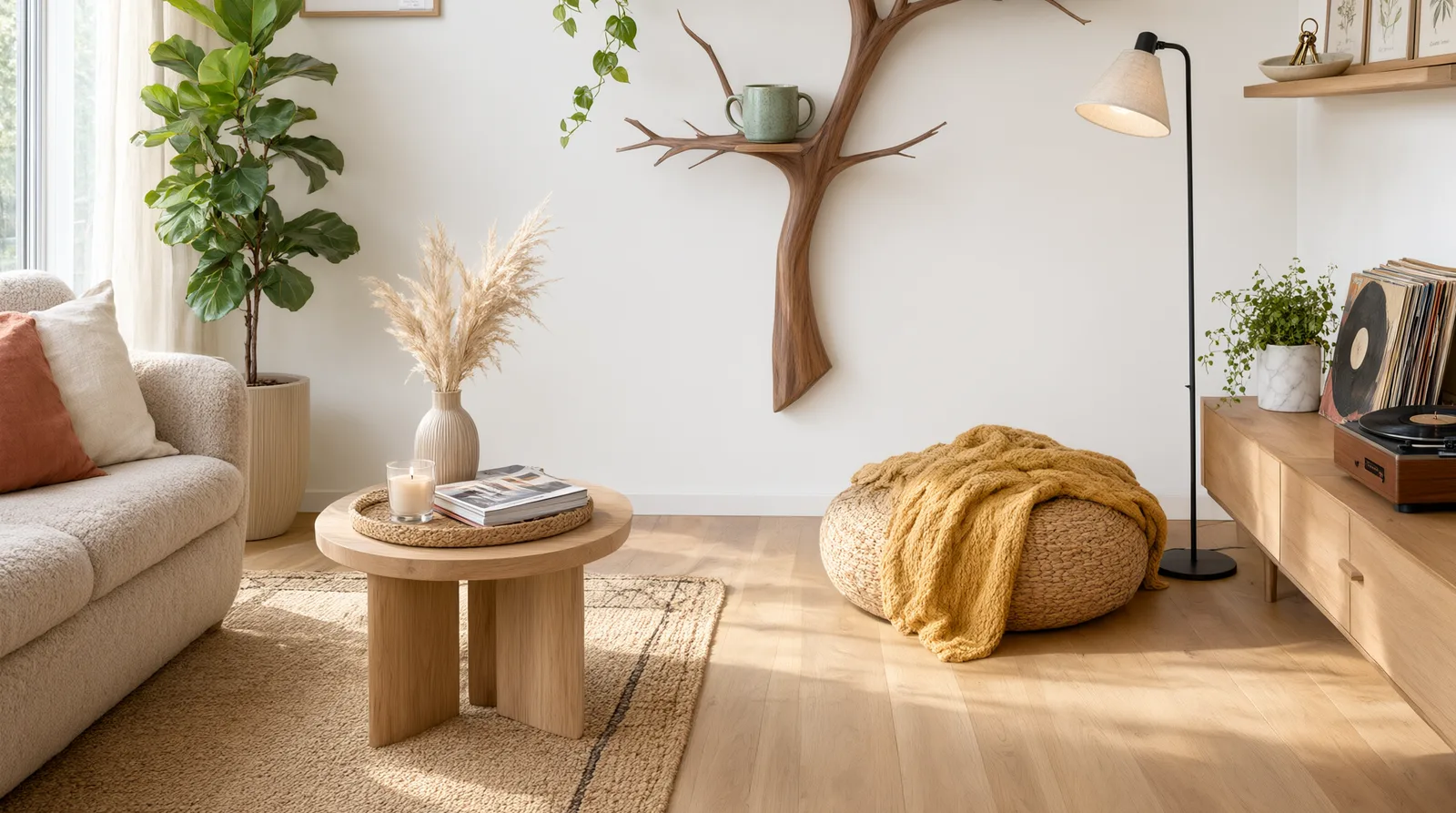
There are always those spots in a room where a standard bookcase simply refuses to cooperate. Maybe it's the narrow sliver of wall between a doorway and a window, a corner in a kid's room that feels cluttered the moment you put furniture in it, or a hallway too tight for anything deeper than a picture frame. A conventional rectangular bookcase — with its boxy depth of 12 inches or more — often creates a visual traffic jam rather than solving a storage need.
That's where a slim wooden tree bookshelf turns an awkward dead zone into a deliberate design moment. Its open, branch-like silhouette trims away all the bulk while still giving you usable shelf space for books, plants, and decorative objects. This isn't about squeezing in storage as an afterthought — it's about picking a piece shaped exactly for the pocket of space you have, and making that corner feel intentional.
The Problem with Standard Bookcases in Tight Rooms
Standard bookcases are built on a simple box formula: rectangular frames, deep shelves, and a solid back. In a spacious living room, that mass can feel grounded. In a narrow hallway, a compact home office, or a child's bedroom already brimming with toys, that same footprint chokes the room quickly. A deep shelf often invites clutter — books pushed to the back, forgotten, collecting dust — without actually serving how most people interact with their belongings day to day.
The visual weight matters just as much as the physical one. A solid-backed bookcase blocks light and sightlines, making small rooms feel smaller. In contrast, the open, airy silhouette of a tree-shaped shelf lets light pass through. The wall behind it remains visible, which keeps the space feeling breathable. It's the difference between a storage box and a piece of functional wall art.
Look around any home, and you'll start noticing the dead zones that a deep bookcase can't touch: the 12-inch strip of wall beside a closet door, the forgotten space behind an open bedroom door, or the corner behind a reading chair where a lamp barely fits. These spots have likely stayed empty simply because traditional furniture was never proportioned for them.
How a Slim Silhouette Changes a Room's Footprint
What defines a slim wooden tree bookshelf isn't just that it's narrow — it's how the design organizes storage vertically while keeping depth minimal. The 'trunk' hugs the wall closely, often projecting only a few inches into the room. Branches function as shallow display ledges where books sit face-out or a small framed photo leans casually, rather than requiring the depth needed to store spine-out rows.
This display-oriented storage changes your relationship with your belongings. You don't always need deep storage that hides things away. A slim tree shelf encourages you to curate — to pull out the five books you're actually reading or the objects that bring you joy — and let them live in plain sight without encroaching on your floor plan. It uses vertical space that a standard bookcase would waste with a solid top panel, drawing the eye up and making ceilings feel taller.
The appeal here isn't niche. Broader trends point to a real hunger for furniture that respects square footage. As noted by Parade.com, slim shelving designs are gaining traction because they solve tight-corner storage without sacrificing style, a shift away from the heavier, bulkier units that dominated for decades.
Where a Slim Wooden Tree Bookshelf Actually Fits
Some placement spots are obvious, but others only become clear once you picture a slim tree profile. Consider a 10-inch-wide strip of wall between a closet frame and a window casing — far too narrow for even the smallest standard bookcase, yet perfect for a tree shelf whose branches stay within that vertical ribbon of space. The same logic applies to a narrow entryway with no depth for a console table: a tree shelf mounted or placed flat against the wall holds keys, mail, and a small plant without blocking the path.
In a nursery or child's room, corners often fill with bulky toy chests or awkwardly angled shelves. The Wooden Arborwyn Sculpted Tree Bookshelf works exceptionally in these tight spots. Its sleek, sculpted trunk silhouette looks modern and clean, leaning into the wall without the heavy visual bulk that makes a small room feel cramped. The branch shelves offer just enough space for board books or a small stuffed animal, turning story time into a display feature.
For spaces where you need storage without sacrificing light or an open feel, a design with upward-reaching branches works better. The Wooden Sakuridge Tree Bookshelf keeps its shelf surfaces airy and spaced apart, so a window's natural light still passes through. Placed beside a sliding glass door or in a bright kitchen nook, it holds a few cookbooks and a trailing plant without ever feeling blocky.
Framing It as a Focal Point, Not an Afterthought
A slim tree bookshelf only looks like an afterthought if you shove it into an empty corner without intention. Small adjustments reframe it entirely. Treat the shelf like a piece of wall art: center it on an empty wall rather than tucking it beside furniture that crowds the branches. Painting the wall behind it a deep accent color — forest green, matte navy, or charcoal — makes the wooden silhouette pop dramatically.
Anchor the area around it with simple additions. A small floor cushion or a narrow reading chair angled toward the shelf turns that wall into a purposeful reading nook rather than a pass-through zone. A picture light mounted above, or even a battery-operated sconce, washes the branches in a warm glow and signals that this piece was chosen deliberately.
The goal is to keep the tree shape itself visible. Use the branch shelves to display curated collections — a handful of favorite books with beautiful covers facing out, a single trailing plant on an upper branch, a framed photo leaning on a lower ledge. When you leave breathing room around each object, the sculptural form of the shelf stays the star.
Choosing Between Wall-Mounted and Freestanding Tree Shelves
Wall-mounted tree bookshelves offer a distinct advantage for ultra-tight quarters: they use zero floor space at all. If your dead zone is a hallway where even a slim freestanding piece would interrupt foot traffic, mounting branches directly to the wall is the answer. This approach also suits renters who can explore removable mounting solutions (a no-drill DIY approach can adapt the look without damaging walls, as covered in our DIY tree bookcase guide).
Freestanding slim tree shelves, on the other hand, make a stronger sculptural statement. Because they sit on the floor, they feel more like furniture — a permanent fixture with presence. This style can be moved as rooms evolve, from a nursery corner to a home office later on. The freestanding trunk, even at a narrow depth, has a stability and weight that wall-mounted versions trade away for minimalism.
Both styles achieve the defining slim profile that works in tight spots. The decision comes down to whether that sliver of floor space is usable or not. If you can spare it, a freestanding piece feels more anchored. If you can't, the wall-mounted option vanishes against the wall while still giving you every branch.
Styling a Slim Tree Shelf Without Overcrowding
The golden rule for a slim wooden tree bookshelf: fewer items, more impact. A narrow branch shows clutter faster than a deep rectangular shelf ever would. Each object you place needs to earn its spot, both in how it looks alone and how it relates to what's on the branch above or below it.
Layering helps. A slim vase with a single stem on one branch, a short horizontal stack of two or three books on the next branch down — this mix of vertical and horizontal mimics the organic asymmetry of a real tree. Keep some branches intentionally bare or nearly bare to let the wood itself breathe. A trailing plant like a small pothos or string of pearls can drape from an upper branch, drawing the eye upward and softening the shelf's lines.
Different branch layouts suit different object sizes. If you prefer to display taller items or a larger number of books, explore silhouettes that offer varied shelf heights and lengths. Our full Bookcases & Standing Shelves collection includes tree-shaped designs with broader landing spots and tighter nooks, making it easy to match the shelf to the specific objects you want to showcase.
A slim tree shelf transforms the spaces most furniture ignores. Whether you're filling that narrow entryway, framing a nursery corner with story books, or turning a blank hallway wall into a curated gallery moment, the right silhouette makes the room feel more considered — never more crowded. Explore the shapes that speak to your space, and let those forgotten corners finally earn their keep.
Frequently asked questions
What makes a tree bookshelf different from a standard bookcase?
A slim wooden tree bookshelf typically has a shallow trunk — often only a few inches deep — with branch-like shelves that hold books and objects face-out rather than spine-out. This open, vertical silhouette uses less floor space and allows light and sightlines to pass through, making small rooms feel bigger compared to a deep, solid-backed standard bookcase.
Does a slim tree bookshelf have to sit on the floor?
Yes. Wall-mounted tree bookshelves attach directly to the wall and occupy zero floor space, making them ideal for hallways, narrow entryways, or spaces where even a slim freestanding piece would block traffic. They can be installed with removable mounting methods to avoid wall damage, which is especially useful for renters.
How do I style a slim tree shelf so it doesn't look messy?
Curate carefully. Use one item per branch on the narrowest shelves, and mix vertical objects (a slim vase) with a horizontal stack of two or three books. Leave some branches bare so the wooden tree shape remains visible. A trailing plant on an upper branch can add softness without cluttering the ledges.
What are the best spots in my home for a slim tree bookshelf?
Place it on a narrow strip of wall between a closet and a window, in an entryway too shallow for a console table, or in a nursery corner that gets cluttered easily. Designs with upward-reaching branches also work well beside sliding glass doors or bright kitchen nooks where you want storage that doesn't block light.