
Tree Bookshelf Speaker Setup: Audiophile Sound Meets Whimsical Wood
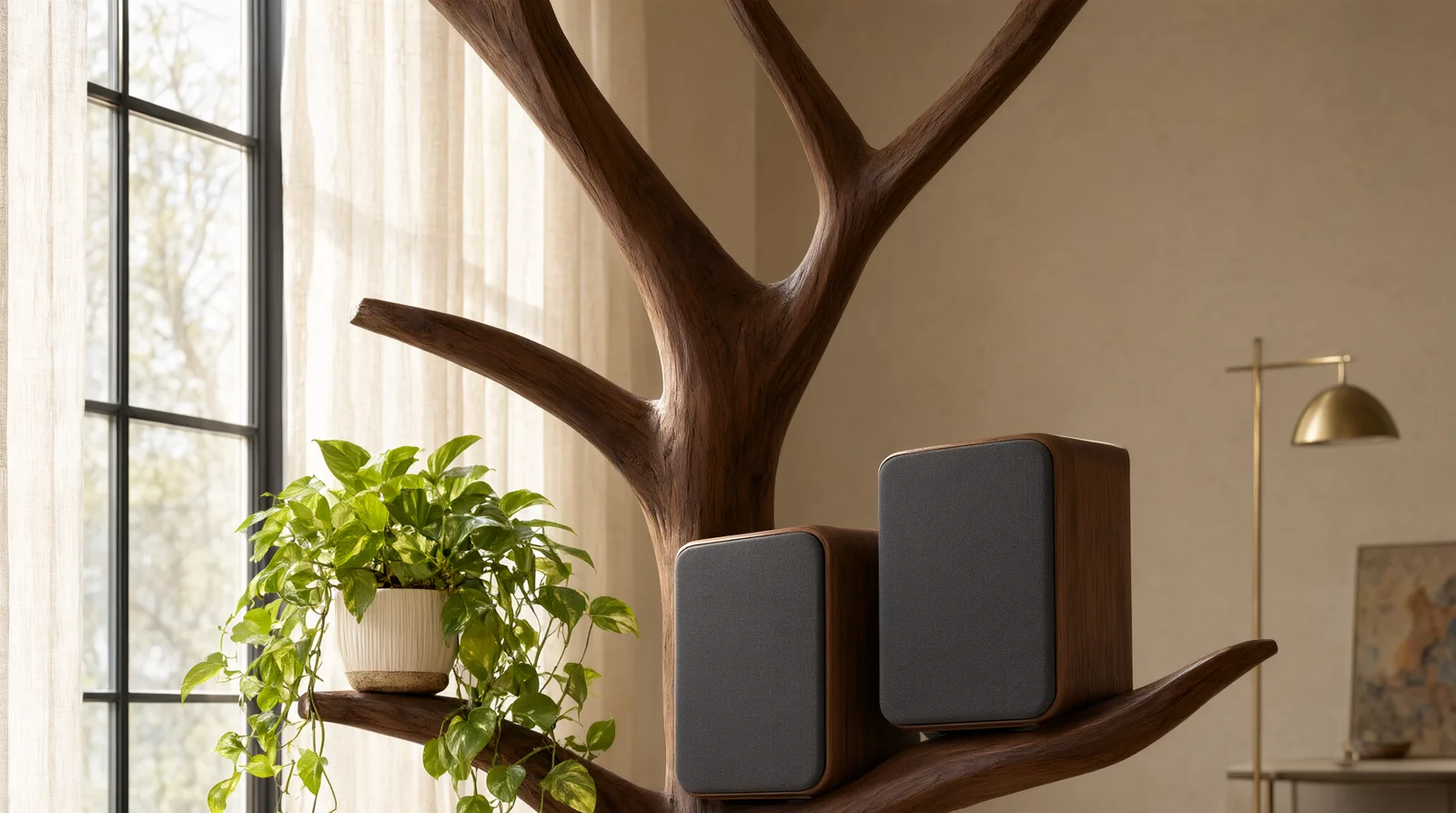
Wooden tree bookshelves transform a room with their organic, sculptural presence — but place a pair of speakers on them without thought, and you risk rattling shelves, uneven sound, or damaging both your gear and the artful branch structure. A successful tree bookshelf speaker setup isn’t about cramming audio equipment onto any flat spot; it’s about treating the shelf’s unique topography as part of the listening experience.
When you choose the right compact speakers, distribute weight wisely, and blend cables with decor, the result is a whimsical focal point that sounds as good as it looks. This guide walks you through everything you need to know.
Why Your Sculptural Tree Shelf Demands a Different Speaker Strategy
Unlike a standard rectangular bookcase, a wooden tree bookshelf presents asymmetrical branches, varying ledge depths, and surfaces that often angle slightly upward or downward. Standard speaker-placement rules — like equilateral triangle positioning at ear height — rarely translate neatly onto a trunk-and-branch layout. Instead of fighting the shape, embrace it: the shelf’s natural nooks can cradle speakers almost like custom stands, while the whimsical silhouette makes the tech feel less intrusive.
The biggest challenges are uneven bearing surfaces, limited truly flat areas, and the vibration transfer that occurs when a speaker’s driver energy passes into a lightweight wooden branch. You’ll want to protect both the shelf’s finish and the speaker housings from scuffs and resonance. The opportunity, however, is that a carefully tuned setup turns your shelf into a conversation piece — not just a storage unit, but an audiophile moment woven into your decor.
Choosing the Right Speakers for Your Tree Bookshelf Speaker Setup
Compact, high-performance bookshelf speakers are your best friends here. A recent Gear Patrol roundup of gorgeous bookshelf speakers for serious audiophiles highlights several models that prioritize nimble size without sacrificing clarity — exactly the trait you need when placing gear on a sculptural shelf. Look for speakers weighing under about 10 pounds each, with front-ported or sealed cabinet designs that don’t require breathing room behind them, since the tree’s trunk or wall will often sit close.
Prioritize dimensions that slide comfortably into a branch nook: a width under 7 inches and depth under 9 inches often works well on shelves like the Wooden Eldrasyl Tree Bookshelf (which offers generous loading areas near the trunk) or the more minimal Wooden Sylvara Flow Tree Bookshelf. Finishes matter too — matte black blends into shadowy branch crotches, walnut veneer echoes the wood grain, and crisp white creates a deliberate, modern contrast against warm timber.
Weight Distribution and Branch Strength: A Practical Guide
Before committing any speaker, test the branch’s stability. Press gently with your hand, gradually adding pressure until you mimic the speaker’s weight; if you feel flex or hear creaking, choose a thicker, more horizontal limb closer to the trunk. The strongest points are almost always near where a branch meets the central trunk — nestle the speaker there, using the trunk as a natural backstop for units that slide backward slightly.
If your tree bookshelf is wall-mounted, confirm it’s anchored into studs and that the mounting hardware distributes load across multiple points. Use a small spirit level to check that the branch you plan to use isn’t tilting forward; even a few degrees can cause a speaker to slide. For extra peace of mind, you can add a discreet L-bracket painted to match the wood, supporting the branch from below without disrupting the aesthetic. Avoid placing any heavy speaker on thin outer tips — balancing weight on both sides of the shelf helps prevent twisting forces on the wall anchors.
Blending Audio Gear into Whimsical Decor
Wires don’t have to be an eyesore. Route speaker cables along the underside of branches using tiny clear adhesive clips, then bundle any slack inside a braided cable sleeve in an earthy tone like olive, bark brown, or charcoal. When the wiring follows the natural lines of the “tree,” it nearly disappears.
Disguise the speaker itself by layering taller hardcover books behind it, so only the front grille and a sliver of cabinet peek out. Drape a small trailing plant — real or faux — over the top edge of the speaker, softening the geometric box with organic shape, and place a tiny ceramic bird or geode beside it to keep the vignette feeling collected, not clinical. Try using two identical speakers as “bookends” for a row of colorful spines, or frame a piece of small wall art on the shelf directly above them. If your shelf’s warm wood provides a neutral backdrop, browse the variety of natural finishes in our Bookcases & Standing Shelves collection for pieces that make blending even easier.
Real-World Inspiration: Tree Bookshelf Speaker Setups That Work
Imagine a setup on the Wooden Sylvenoak Tree Bookshelf: its two broad lower branches angle just slightly upward, creating ideal perches for a pair of compact, walnut-veneer speakers. Place each speaker on the innermost flat section, with their rear panels gently touching the central trunk — this kills any micro-wobble and directs sound outward into the room. Between them, stack a few antique-looking books horizontally, then top the stack with a small amethyst cluster. The speakers now anchor the composition while reading as deliberate decor.
For additional styling cues that honor the wood itself, our earlier post on Vintage Tree Bookshelf Decor offers complementary layering ideas without duplicating the speaker advice here. As you curate your shelf, think in layers — sound (the audio gear), sight (books, plants, objects), and touch (the natural wood grain) — so the whole arrangement feels alive and intentional rather than cluttered with tech. A well-set-up tree bookshelf with quality audio becomes the room’s focal point, sparking conversations about both your taste in music and your eye for design.
Ready to find the sculptural shelf that will anchor your sound and style? Explore our full Bookcases & Standing Shelves collection for the perfect wooden canvas.
Frequently asked questions
Can I use any bookshelf speaker on a tree shelf?
No; standard floor stands are designed for flat, rectangular shelves. A tree bookshelf requires compact, front-ported speakers placed in branch nooks, with careful weight distribution and wire management that follows the organic shape.
How much weight can a tree bookshelf branch hold?
Most smaller wooden tree bookshelf branches can handle 8 to 15 pounds near the trunk if properly mounted, but you should always test gently with hand pressure first. For heavier setups, reinforce below with a discreet bracket painted to match the wood.
How do I hide speaker wires on a tree bookshelf?
Route cables along the underside of branches using tiny clear clips, then wrap excess in a braided sleeve in an earthy tone like bark brown or olive. Let the wire follow the tree’s silhouette so it almost disappears.
What speaker features are most important for this setup?
Look for front-ported or sealed speakers under 10 pounds each, with compact dimensions (under 7 inches wide and 9 inches deep). Finishes like matte black, walnut veneer, or white help them blend with wood tones or create intentional contrast.