
Tree Bookshelf Styling Tips: Frame It as Living Decor, Not Furniture
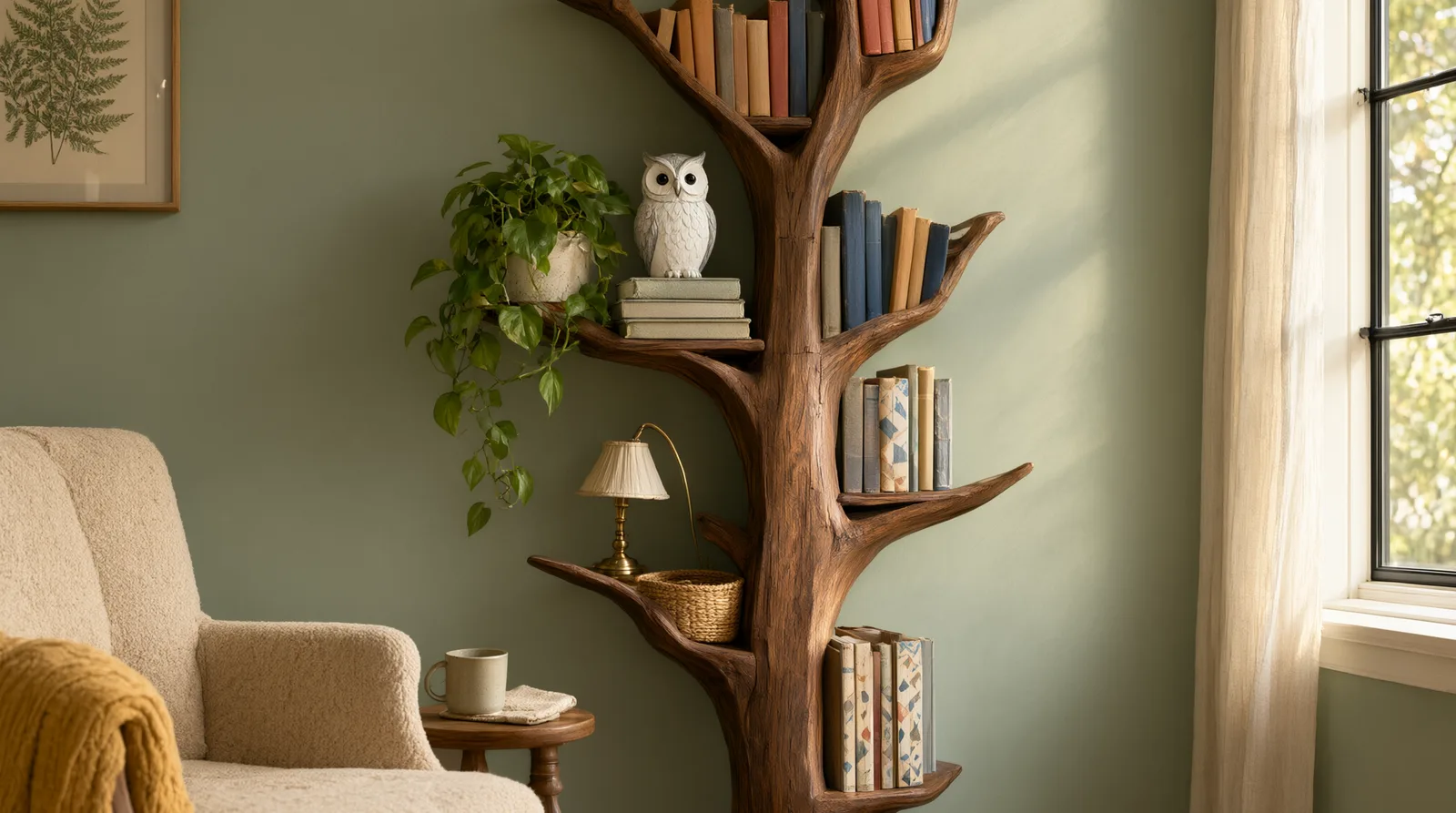
Owning a wooden tree bookshelf invites a touch of whimsy into your home, but its sculptural branches demand more than just filling every ledge with novels. With the right tree bookshelf styling tips, you can transform it into a piece of living decor—an ever-evolving focal point that breathes with your space.
Tree Bookshelf Styling Tips: Let the Silhouette Breathe
A tree bookshelf’s sculptural branches are its greatest asset—cover them with too many books, and the organic shape gets lost in visual noise. Instead, follow a 60-40 rule: dedicate about 60% of the shelf to intentional displays and let the other 40% remain open, showing the woodwork and creating breathing room.
This airy approach is especially important for tall, narrow designs like the Wooden Sylvenoak Tree Bookshelf or the Wooden Noctaryn Flow Tree Bookshelf. Their slim footprints rely on negative space to avoid feeling claustrophobic in tight corners. Just as you wouldn’t drape every branch of a real tree with ornaments, let the structure of your wooden piece shine through—it’s the difference between a piece of furniture and a piece of living art.
Ground the Trunk: Anchor the Base for Visual Weight
Starting your styling at the bottom prevents a tall shelf from feeling unstable or top-heavy. Place heavier, wider items on or near the lowest platform to create a visual anchor, which also helps the piece feel integrated into the room rather than teetering against the wall.
Try stacking a few large-format art books flat, then adding a small potted pothos whose vines can spill softly over the edge. A low woven basket tucked beside the trunk can hold extra throws or magazines, adding texture while keeping the area grounded. Many tree bookshelves in our Bookcases & Standing Shelves collection feature a sturdy, wide base that makes this anchoring technique both beautiful and practical. Especially in homes with curious kids or pets, that grounded weight adds a welcome sense of security without needing wall anchors.
Curate in Clusters Across the Branches
Resist the urge to place one lonely object per branch; that approach can make a sculptural shelf look sparse and unfinished. Instead, use the “triangle method” to build mini vignettes: group three items of varying height, texture, and material on a single branch or across two adjacent branches. The varied heights create a visual triangle that draws the eye.
Cluster ideas might include a small ceramic vase + a slim vintage hardcover + a smooth river stone or ceramic acorn. Or lean a tiny framed print against the trunk, add a petite clock, and tuck in a sprig of dried eucalyptus. Mixing a horizontal stack of books with a vertical stack right beside it follows the organic flow of the branches and prevents monotony. The result feels collected over time, not staged in a showroom.
Let the Branches Guide Your Book Placement
A tree shelf rarely offers straight, uniform ledges, so forcing standard rows of books works against its character. Instead, let the asymmetrical branches dictate where volumes naturally rest. Wide horizontal branches are perfect for stacked piles; a crook where a branch meets the trunk can cradle a few vertical spines or a face-out display of a favorite picture book.
Use the branch “cradles”—those small nooks formed where branches split from the trunk—as gallery spots for a single treasured title propped open or a small object like a magnifying glass or antique compass. Tucking a vintage camera or a seashell between book stacks adds texture and storytelling charm, reinforcing the idea that your bookshelf is a living collection. The concept isn’t new; even Princeton's recent faculty bookshelf spotlight shows how curated stacks and mixed objects reflect an owner's story. Just as we explored in our Mr. Tumnus-inspired guide, the whimsy of a tree shelf thrives when you let its organic shape take the lead rather than imposing rigid order.
Using the Wall Behind as Part of the Display
Treat the wall space around and behind your tree bookshelf as an extension of the display. This is especially effective if you’re using a leaner style or a tree wall bookshelf that floats against a painted surface. A subtle backdrop elevates the entire silhouette from quirky shelf to intentional art installation.
Consider peel-and-stick wallpaper with a soft leaf pattern or a muted paint color—sage green, warm clay, or dusty blue—that contrasts gently with the wood tone without competing. A simple string of warm micro LED fairy lights tracing the trunk line adds an evening glow and reinforces the living-sculpture feel. Avoid busy patterns or dark wall colors that swallow the wooden silhouette; the goal is to frame the tree, not fight it for attention.
Seasonal Rhythms: Rotate Your Shelf Like Living Decor
Embrace the shelf’s organic spirit by swapping in a few seasonal accents, much like a real tree changes through the year. This keeps your room feeling fresh without buying new furniture every season. In fall, add mini pumpkins and warm amber glass; winter asks for pinecones and soft candlelight; spring welcomes tiny bud vases with fresh blooms; summer highlights airy shells and light linen napkins draped over a branch.
The key is restraint: rotate only three or four objects at a time so the shelf never turns into a holiday decoration dumping ground. Our budget-friendly fall guide offers easy, low-cost ideas to start this rhythm, but you can apply the same principle year-round. A few well-chosen swaps keep the display curated and allow the tree’s sculptural lines to remain the star.
Ready to let your bookshelf tell a story? Explore our full Bookcases & Standing Shelves collection to find the wooden tree bookshelf that will transform your wall into a living, breathing focal point.
Frequently asked questions
How do I style a tree bookshelf without it looking cluttered?
Use the 60-40 rule—keep about 40% of the shelf empty so the branches can breathe. Group objects in clusters of three using the triangle method, and avoid placing solitary items on individual branches. This creates a curated, airy look that highlights the sculpture.
What should I put at the bottom of a tall tree bookshelf to make it stable visually?
Anchor the base with heavier, wider items like a stack of large art books, a potted trailing plant, or a low basket. This adds visual weight and makes the tall silhouette feel grounded, which is also helpful in homes with kids or pets.
Can I use a tree bookshelf for books as well as decor?
Absolutely. Let the branches guide your placement—tuck vertical books into nooks, stack horizontally on flat branches, and use branch cradles to display a favorite book face-out. Mix decorative objects among the books to maintain the whimsical character.
How do I change my tree bookshelf decor for different seasons?
Rotate three to four small accessories with the seasons: mini pumpkins and amber glass in fall, pinecones and candles in winter, fresh bud vases in spring, and shells or light textiles in summer. This keeps the shelf feeling alive without overwhelming the design.
What wall color or backdrop works best behind a wooden tree bookshelf?
A muted, contrasting color like sage green or dusty blue helps the wood silhouette pop without competing. Subtle peel-and-stick wallpaper with a leaf pattern or warm fairy lights can enhance the living-sculpture effect. Avoid busy patterns or dark walls that obscure the tree's shape.