
Tree Wall Bookshelf: The Magical Upgrade Over Traditional Wall Storage
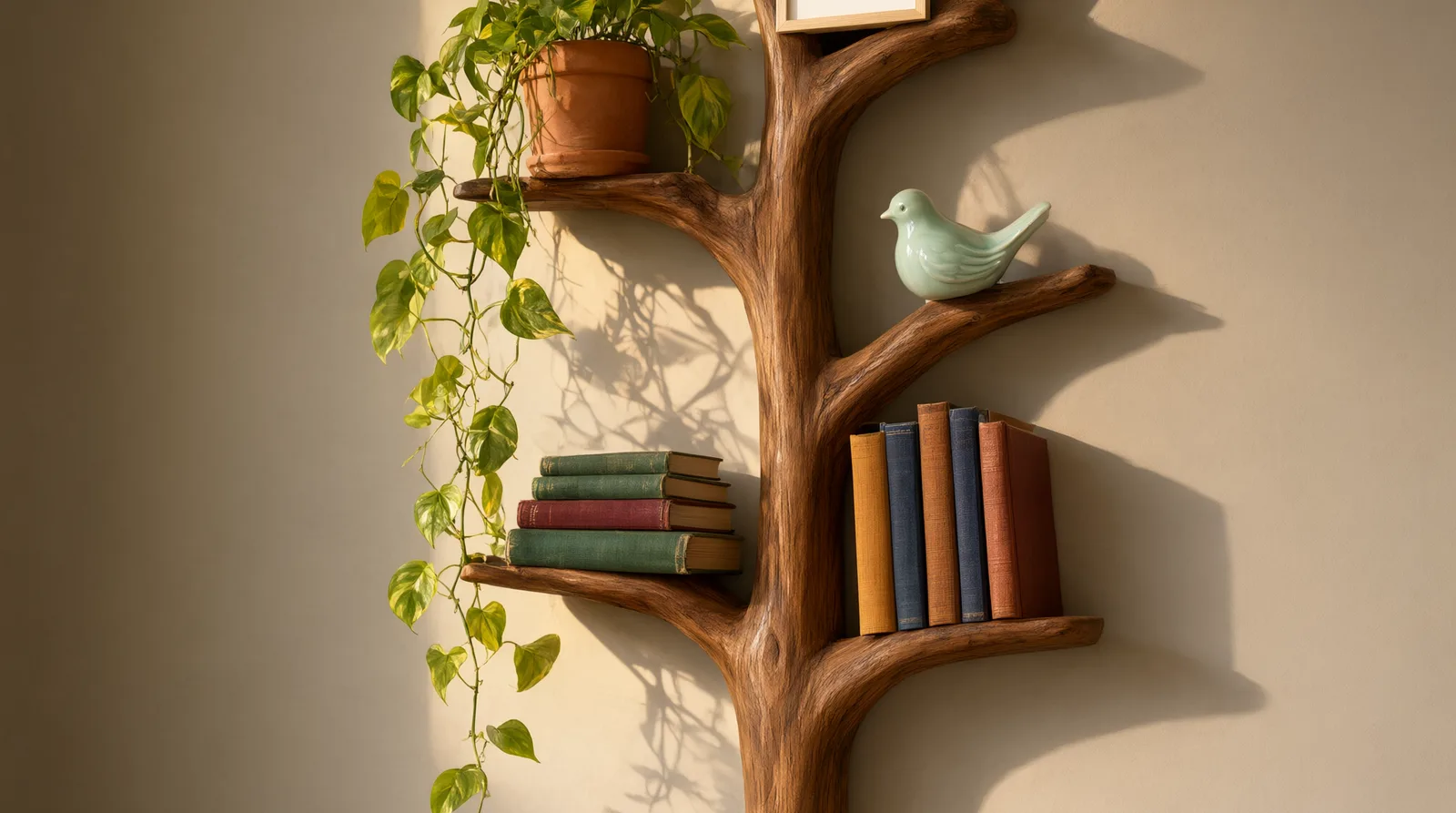
Wall storage is often an afterthought—a couple of plain floating shelves that hold books but add zero personality. You might have even spent weekends hunting thrift stores, hoping for that one quirky vintage shelf that sparks joy. But luck doesn't always strike, and refurbishing a tired find can eat up your time. There's a simpler, more enchanting solution: a tree wall bookshelf that turns an empty wall into a whimsical woodland scene while keeping everything you love within reach.
What Makes a Tree Wall Bookshelf Different?
A tree wall bookshelf is exactly what it sounds like: a wall-mounted shelving unit sculpted into the organic shape of branches, trunks, or a full canopy. It merges functional storage with a piece of art, so you're not just organizing your books; you're inviting a bit of the forest indoors. Unlike mass-produced floating shelves made from particleboard or MDF, a wooden tree bookshelf is crafted from solid timber like oak, walnut, or pine—materials that bring natural grain and warmth to your room. That's a far cry from the often mystery materials of a thrift-store find, where you might not know if an old bracket will hold up over time.
A new tree wall bookshelf doesn't ask you to dig through dusty shelves or repaint a chipped relic. It arrives as an instant focal point, with its own magical woodland narrative already built in. The moment you hang it, the wall feels intentional—like you've curated a secret garden for your favorite reads.
The Quiet Magic Over Traditional Wall Shelves
Standard floating shelves are linear and predictable. A tree wall bookshelf breaks free of that geometry with branches that curve, reach, and arc in unexpected directions. That organic movement makes a room feel alive, as if the wall itself is gently growing. It's the kind of character you might chase for years in vintage shops, but here it's the result of a woodworker's art, not a lucky accident.
Because the shelves aren't uniform, they encourage playful display groupings. An asymmetrical branch invites you to lean a thick hardcover against a tiny potted succulent, while a cluster of twig-like shelves can hold your most cherished keepsakes. The eye dances across the space, finding new details each time. Traditional shelves demand symmetry and order; a tree bookshelf lets you be a little more imaginative, turning your wall into a story-rich composition instead of just storage.
Why We Can Stop Hoping for That Perfect Thrift Store Score
Thrifting is a treasure hunt, and sometimes you come home empty-handed. As a recent piece on MSN highlighted, secondhand shelves can indeed turn storage into beautiful wall art—but finding the right one means countless visits, haggling, and often a weekend of sanding and painting. A tree wall bookshelf removes all that uncertainty. You choose the exact size, finish, and wood tone that match your space, and it arrives ready to hang with all the necessary hardware included.
Consistency matters, too. If you fall in love with a particular branch design, you can order exactly that—no wondering if the shop around the corner will still have it next week. And there's peace of mind in knowing the piece was built to support the weight it carries. Quality wooden tree shelves come with sturdy brackets and proper anchoring instructions, so you never have to guess whether a 30-year-old bracket will give out on your first-edition hardcover.
Picking the Branch That Fits Your Wall
Not every tree bookshelf will look right on every wall. Scale is your first decision. A larger, more sprawling design like the Wooden Eryndor Tree Wall Bookshelf makes an unforgettable statement above a sofa or a desk, where its long limbs can stretch without crowding the room. For a narrow hallway or a cozy reading nook, a smaller, more compact branch configuration will feel proportional and won't overwhelm the space.
Wood tone sets the mood. Light ash or maple shelves keep things airy and suit Scandi-inspired rooms, while richer walnut or darker stains create a library-like warmth that invites you to curl up nearby. Match the finish to your existing furniture for a seamless look, or deliberately contrast it to give an eclectic edge to the room. Finally, think about the branch layout: some designs offer many little "twigs" for tiny treasures, others feature deeper platforms that can cradle chunky books or small planters. Let what you love to display guide your choice.
Styling It to Tell Your Story, Not Just Hold Things
The real fun begins once it's on the wall. A tree bookshelf begs you to do more than line up paperbacks in a neat row. Layer books with small potted plants (real or faux), framed photos, a favorite crystal, and travel keepsakes. The irregular branches turn each shelf into its own tiny stage, so a miniature terracotta pot and a few stacked novels can become a little vignette that feels entirely yours.
Play with visual weight. Lean a large hardcover horizontally, then stand a couple of smaller paperbacks upright on the same branch. Let some shelves breathe with just one special object—a ceramic bird, a vintage alarm clock—so the eye can rest. To pull the whole display together without killing the whimsy, repeat one color or material across the branches: brass frames, terracotta pots, or even a consistent spine color on your books. That subtle repetition turns a whimsical tree into a curated, thoughtful gallery.
The Unexpected Room That Comes Alive First
Living rooms are the obvious place for a statement shelf, but entryways and home offices might benefit even more. A tree wall bookshelf hung near the front door instantly softens a utilitarian drop zone, giving you a place to stash keys, mail, and a small plant without stealing any floor space. In a home office, it breaks up the monotony of a blank wall and keeps reference books within arm's reach.
Narrow hallways are another hidden opportunity. By mounting a slim branch design, you add storage that doesn't jut into the walking path, making the passage feel wider and more welcoming than a bulky console table ever could. Kids' rooms get a dose of magic, too—organized book displays on tree branches can make storytime feel like an adventure. For more inspiration on maximizing tight spaces, see how a slim tree bookshelf solves awkward spaces.
Whichever room calls for a touch of woodland enchantment, you'll find a design that fits. Browse the full Bookcases & Standing Shelves collection to discover wall-mounted and standing tree bookshelves that transform how you store and display the things you love.
Frequently asked questions
How much weight can a tree wall bookshelf hold?
Most solid wood tree shelves are designed to support a stack of books, small plants, and decorative items when properly anchored into wall studs or installed with heavy-duty drywall anchors. The exact capacity varies by model and installation, but they generally hold as much as a well-mounted standard shelf of similar proportions. Always follow the included mounting instructions and hardware guidelines for the safest result.
Do I need to find a stud to mount a tree wall bookshelf?
No, you don't have to. While anchoring into studs provides the most secure hold, many tree bookshelves can be mounted on drywall using the appropriate anchors—just make sure the anchors are rated for the total weight you plan to place on the shelf. If you’re a renter, check your lease on drilling, but the included hardware usually gives you the flexibility to safely secure the piece without major wall damage.
Can I use a tree wall bookshelf in a kid’s room or playroom?
Yes, you absolutely can, and it can become a magical focal point in a child’s room. Make sure the shelf is mounted securely at a height kids can reach their favorite books and toys, and avoid placing heavy items on higher branches if little climbers are around. For a completely drill-free option, you might explore a floor-standing tree bookshelf that brings similar whimsy without any wall attachment.
What's the best way to style a tree wall bookshelf?
Start by mixing books with personal treasures like small plants, framed photos, crystals, or travel keepsakes. Use the irregular branches to create little vignettes—lean a hardcover horizontally and stack a couple of paperbacks vertically, or let a single special object shine on its own branch. Repeating one color or material (like terracotta pots or brass frames) across different shelves ties the whole look together without sacrificing the whimsical feel.